
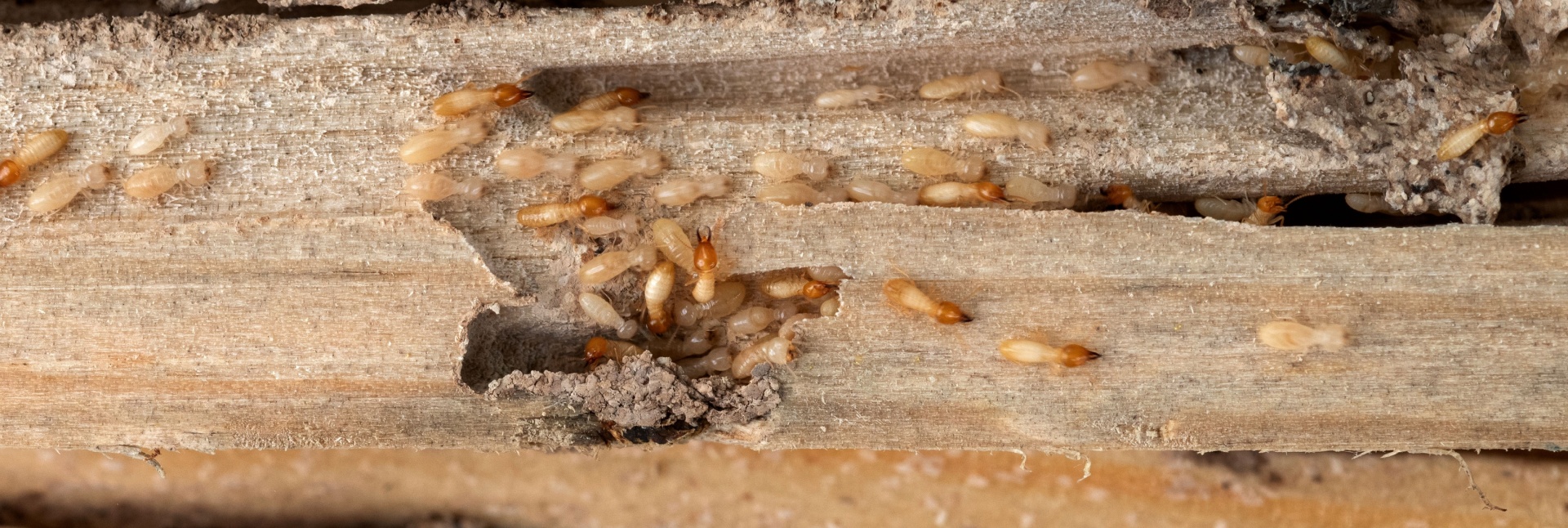
Termites can cause extensive damage to property for a long time without being noticed. Homes in Buffalo Grove can have wood structures and seasonal moisture, so termite activity can escalate quickly. It is important to spot early signs of an infestation to protect your property and avoid costly repairs. This allows you to contact Pointe Pest Control and have the company send a team of technicians to eliminate active infestations on your property.
Termites live in colonies and work together to feed on wood, cellulose, and other organic materials. Subterranean termites build nests underground and travel through soil to reach your home. Drywood termites reside directly in wood, producing damage without soil contact. Both types remain hidden while causing structural harm. They feed slowly and quietly, which allows them to weaken beams, flooring, and support structures. Below are signs of termite activity:
Mud Tubes on Foundations and Walls
Subterranean termites create these narrow, dirt-covered tunnels along foundations, walls, and crawl spaces. Mud tubes serve as protected pathways from the colony to food sources. They can be less than half an inch wide and may appear along concrete, wood, or even brick surfaces.
Hollow or Damaged Wood
Termites consume wood from the inside out, leaving the surface intact initially. But hollow sound be produced if people tap on damaged wooden beams, door frames, or flooring. Buffalo Grove properties with older construction or wood exposed to moisture may show signs of soft or crumbling wood. Termites carve intricate galleries as they feed, creating hidden cavities that weaken structural integrity.
Discarded Wings
Swarming termites leave behind wings when searching for new nesting locations. Swarmers appear seasonally, usually in the spring or after heavy rain. Wings may accumulate near windows, doors, or light sources. The presence of discarded wings inside or outside your home can mean termites have established a colony nearby.
Small Piles of Frass
Drywood termites produce frass, which consists of tiny wood-colored pellets. These droppings may appear in small piles beneath infested furniture, beams, or wooden structures. Frass often resembles sawdust, but careful observation reveals its uniform shape. They can be found inside attics, closets, or along baseboards.
Tight or Bubbling Paint
Moisture and termites’ feeding activity beneath walls can create paint that appears tight, blistered, or bubbled. Other factors can cause paint issues, but combining this sign with wood damage, mud tubes, or frass can strengthen suspicion. Homeowners can catch termite activity if they monitor painted surfaces near crawl spaces, basements, and structural beams.
Cracked or Hollow Flooring
Termite activity may cause minor shifts in flooring. Hardwood floors may warp, squeak, or lift slightly as internal cavities develop. When tapped, suspect areas may produce a hollow or empty sound. Buffalo Grove homes with basements or crawl spaces beneath the flooring are particularly at risk of termite infestation. Subterranean termites may enter through soil and undermine floor joists, creating structural instability if left untreated.
Nesting Evidence in Moist Areas
Subterranean termites favor moisture, so early activity can be noticed in areas near plumbing, HVAC systems, or roof leaks. Regular checks in these areas help detect termites before they spread to load-bearing structures.
How Seasonal Patterns Can Help Detect Termites
Termite swarming occurs seasonally, often triggered by spring warmth or rain. Buffalo Grove properties may experience an increase in termite visibility during these periods, with swarmers emerging from soil or wood to start new colonies. These high-activity times should be monitored to increase the chance of catching infestations early. But year-round vigilance is important since termites feed continuously in hidden areas.
Early Inspection and Professional Help
Homeowners can spot signs like mud tubes, hollow wood, or discarded wings, but professional inspections provide confirmation and a treatment plan. Experts identify the species, locate nests, and apply targeted solutions to eliminate colonies. Regular inspections can help maintain property value and reduce costly repairs.